Metro is King: Navigating Shanghai's High-Speed Lifeline
"The fastest way to conquer Shanghai is not to fight the crowd, but to flow with the current of its transit network."
Navigating a metropolis of 34 million people requires more than just a map; it requires a strategy.
Whether you are landing at Pudong for a high-stakes meeting or wandering through the Former French Concession, understanding the pulse of the city's transit is the difference between a seamless trip and a logistical nightmare.
Key Takeaways * The Metro is King: The subway is the high-frequency backbone that bypasses the city's notorious surface traffic. * Digital Payment is Mandatory: Success depends on having your transit apps and digital wallets configured before you step onto a platform.
* Strategic Route Planning: Choosing between the Metro, buses, and taxis should depend on your specific destination and the time of day.
How to Master the Shanghai Metro: Your High-Speed Lifeline
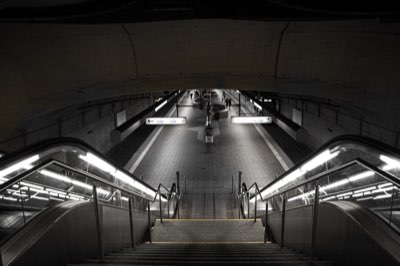
Standing on the platform at People's Square at 8:30 AM, the sheer volume of moving bodies is enough to make anyone pause. The air hums with the sound of turnstiles and the synchronized footsteps of thousands of commuters moving toward the next line.
According to the International Congress and Convention Association, Shanghai hosted 82 international meetings in 2018. The Shanghai Metro is one of the most extensive and heavily utilized transit systems in the world.
Its scale is a necessity for a metropolitan area with an estimated population of 34 million, according to the OECD.
Because the city is so vast, the metro serves as the primary circulatory system, moving millions of people through various districts every single day.
In the early years of the system's expansion, the efficiency was already notable; for instance, the coverage of operating costs from the ticket revenue of Shanghai metro lines 1 and 2 was over 100% in the years 2000 to 2003.
This financial stability has allowed for the massive, rapid expansion seen today. By 2004, the average daily passenger flow of rail transit was already reaching 1.32 million trips, representing a significant shift in how the city moved.
When navigating the system, the key is understanding line colors and numbers. The network is designed to be intuitive, but the sheer number of stations can be overwhelming. Always look for the transfer symbols on the maps to see where lines intersect.
Fares generally start at a 3 RMB baseline and increase based on the distance traveled.
| Feature | Description | Best For |
|---|---|---|
| Metro | High-speed, underground, punctual | Long distances and avoiding traffic |
| Bus | Surface level, covers residential areas | Short hops and scenic routes |
| Taxi/Didi | Door-to-door, private | Late nights and heavy luggage |
When I first arrived and tried to navigate the sprawling interchanges, I realized that a single wrong turn could add 30 minutes to a journey. But the real challenge isn't just the distance; it's what happens when you step back onto the street.

How can buses, taxis, and trams work together? Stepping out of a cool, air-conditioned subway station into the humid afternoon heat of a busy street, you realize the journey isn't over. The street level is a different world of colorful buses and winding lanes.
While the metro handles the heavy lifting, the bus and tram networks provide the "last mile" connectivity. Integrating these modes is essential for reaching specific corners of the city that the subway might miss.
For example, many residential areas and scenic pockets are better served by the local bus network.
One of the major advantages of the integrated system is the potential for transfer discounts. In many transit scenarios, you can receive a 1 RMB discount for transfers between different modes of transport if completed within a specific time window, such as 120 minutes.
This makes combining a metro ride with a short bus trip a very cost-effective way to travel.
When considering a taxi or a ride-hailing service like Didi, the cost-benefit analysis changes throughout the day. A 15km journey during peak hours might take twice as long in a car as it would on the metro, and the price can fluctuate based on surge pricing.
However, for business travelers moving between hotels and meeting hubs, the convenience of a door-to-door service often justifies the higher cost.
The city is also moving toward a greener future. There is a visible trend toward modernized, eco-friendly fleets, with a significant push toward new energy buses to reduce the urban carbon footprint. But even with the best buses and trains, you can still get stuck at the gate if you aren't prepared.
How can I pay for travel easily as a foreigner? At a busy kiosk, a traveler stares at a screen, trying to figure out how to load value onto a transit card while a line forms behind them. The friction of a single failed transaction can stall an entire day of travel.
For the modern traveler, the digital hurdle is the first and most important obstacle. Gone are the days of carrying heavy pockets of coins. Today, the transit system is almost entirely digital.
Setting up Alipay or WeChat Pay with your international credit card is the single most important step you can take before arriving.
Digital wallets allow for seamless scanning at turnstiles. Beyond mere convenience, there can be smart ticketing value; in some integrated systems, you can see benefits like a 10% discount after reaching certain spending thresholds in a month.
It is important to distinguish between physical and digital transit cards. While physical cards are still useful for long-term residents, digital QR codes on your phone are the standard for tourists.
Be aware of the time windows: a transfer between a bus and the metro might have a different time limit (such as 30 minutes versus 120 minutes) than a transfer between two different bus lines.
If you find yourself stuck, most major stations have service centers where staff can assist with digital setup issues. However, the "quick fix" is always to ensure your international cards are verified and linked to your mobile wallet before you reach the station.
If you can solve the payment puzzle, you can start tailoring your movement to your specific goals.
Strategic Mobility: Tailoring Your Journey to Your Goal
A businessman in a sharp suit checks his watch while standing in a quiet, leafy corner of the French Concession, while a tourist with a camera looks up at the towering skyscrapers of Pudong. Their needs for movement are worlds apart.
Your transit strategy should change based on your objective. If you are on a sightseeing mission, you will likely rely on the metro to jump between major hubs like the Bund and the residential charm of the Former French Concession.
The metro is the fastest way to cross the city without getting caught in the unpredictable surface traffic.
For business travelers, the focus shifts to efficiency and reliability. If you are attending an exhibition at the National Exhibition and Convention Center (NECC), you need to know exactly which lines lead to the industrial outskirts and how to time your departure to avoid the morning rush.
Airport transfers require a different level of planning. Whether you are using the Maglev or the dedicated airport express lines, you must account for the time it takes to get from the station to your actual hotel.
When deciding between a taxi and mass transit, consider the "Time vs. Cost" trade-off.
If you have a tight window for a meeting, a taxi is often the safer bet to ensure you arrive on time, whereas the metro is the superior choice for budget-conscious and time-predictable travel during non-peak hours.
But what happens when you aren't just visiting for a day, but staying for the long haul?
Beyond the Core: Planning Trips with Extended Validity
Looking at a multi-day itinerary spread across a coffee shop table, the traveler realizes that a single day of travel is just the beginning of a much larger puzzle. According to the World Bank, China recorded a high-technology share of manufactured exports of 26.3% in 2024.
For those staying in Shanghai for a week or more, you might consider the value of multi-day passes or specific transit covers. While the standard pay-as-you-go model is flexible, certain passes can offer significant savings for heavy users. Intermodal planning is also key.
A trip might involve a high-speed train to a nearby water town, followed by a local bus and a short taxi ride. Understanding how these different legs connect—and whether your digital wallet covers all of them—is vital for a smooth journey.
To ensure you never miss a connection, follow this transit readiness checklist:
- Verify Digital Wallets: Ensure Alipay or WeChat Pay is linked to an active international credit card and pass identity verification.
- Download Transit Mini-Apps: Install the specific transit apps within your digital wallet to generate QR codes for the metro and buses.
- Map Your Transfers: Check the time limits for transfers (e.g., the 120-minute window) to maximize discount opportunities.
- Plan for Peak Hours: Avoid the 7:30–9:30 AM and 5:30–7:30 PM windows unless you are prepared for heavy crowds.
- Identify Service Centers: Locate the service desk in your arrival station to handle any immediate digital or physical card issues.
Finally, timing is everything. Navigating the peak hours can be an intense experience. If your schedule allows, traveling during off-peak hours will provide a much more comfortable and pleasant way to see the city.
#




Comments 0